MPFL Reconstruction Protocol
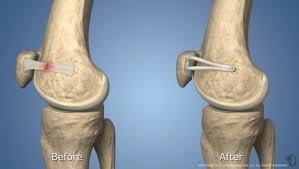
The medial patellofemoral ligament (MPFL) is one of the main ligaments that helps keep the kneecap (patella) stable and prevents it from sliding out of place. An MPFL reconstruction is a surgery performed to restore stability to the kneecap after repeated dislocations or instability episodes.
Recovery after surgery is a gradual process that focuses on protecting the reconstruction while safely restoring motion, strength, balance, and function to the knee. Physical therapy plays an important role in helping you return to normal daily activities and eventually sports or exercise.
This rehabilitation protocol is designed to guide your recovery step-by-step. Every patient heals at a slightly different pace, so your surgeon or physical therapist may adjust the program based on your progress, swelling, pain, and overall knee function.
Postoperative Instructions
- Please call with any concerns: (856)-751-5100.
- Apply ice to the knee, as it will be quite helpful. After two days, you can change the dressing to a smaller one to allow the cold to better get to the knee.
- Please wear your brace when you are up and moving at all times.
- After two days it is okay to shower and get the wound wet, but do not soak the wound as you would in a bath tub or hot tub.
- After knee surgery there is a variable amount of pain and swelling. This will dissipate after several days. Continue to take the Tylenol and over the counter anti-inflammatory medications (Alleve, Motrin etc) if you are allowed to. If you notice calf pain or excessive swelling in the lower leg, call your doctor.
- It is important to look out of signs of infection following surgery. These can include: fever (temperature > 101.5°), chills, nausea, vomiting, diarrhea, redness around your incision, or yellow or green drainage from your incision. Should any of these be present please contact Dr. Ford’s office immediately.
- You will have crutches and a brace after surgery. It is important to use these as directed in the rehabilitation protocol (see below).
- You will have an office visit scheduled approximately 10-14 days after your surgery.
I. IMMEDIATE POST-OPERATIVE PHASE (Week 1) (Weeks 0-2)
Goals
- Diminish swelling/inflammation (control hemarthrosis)
- Initiation of quadriceps muscle training
- Independent Ambulation
Activities
Weight Bearing: As tolerated with crutches and brace locked at 0-45 degrees of flexion. The brace should be locked straight when ambulating with the crutches but can be unlocked when sitting.
Swelling/ Inflammation Control: Cryotherapy, NSAIDS, Elevation & Ankle Pumps
Range of Motion: ROM to 45 degrees of flexion in brace for 2 weeks
Muscle Retraining: Quadriceps isometrics, Straight Leg Raises, Hip Adduction
Flexibility: Hamstring Stretches, Calf Stretches
II. ACUTE PHASE (Week 2-6)
Goals
- Control swelling/inflammation
- Gradual Improvement in ROM
- Quadriceps Strengthening (Especially VMO)
Note: Rate of progression based on swelling/inflammation.
Activities
Weight Bearing: Discontinue crutches when appropriate, Progress WBAT with brace.
Swelling/Inflammation: Cryotherapy, NSAIDS, Elevation and Ankle Pumps
Range of Motion: Rate of progression based upon swelling/inflammation. Range of motion is permitted 0-90 degrees beginning day 15. Motion should not be forced (active, active assisted and passive ROM permitted). At least 90 degrees flexion (Week 6)
Muscle Retraining: Electrical muscle stimulation to quads, Quad Setting Isometrics, Straight Leg Raises (flexion), Hip Adduction, Knee Extension 60-0 degrees, pain-free arc, Bicycle (Stationary, in brace) if ROM/Swelling permits, Proprioception Training
Flexibility: Continue Hamstring, Calf Stretches, Initiate quadriceps muscle stretching
III. SUBACUTE PHASE – MODERATE PROTECTION (Week 6-12)
Goals
- Eliminate any joint swelling
- Improve muscular strength and control without exacerbation of symptoms
- Functional exercise movements
- May discontinue brace
Criteria to Progress to Phase III
- Minimal inflammation/pain
- ROM (0-near full flexion)
- Strong quadriceps contraction
Exercises
Continue muscle stimulation to quadriceps (if needed)
- Quadriceps setting isometrics
- 4 way Hip Machine (hip adduction, abduction, extension, and flexion)
- Lateral Step-Ups (if able)
- Front Step-Ups (if able)
- Squats against wall (0-60 degrees)*
- Knee Extension (90-0 degrees), pain-free arc
- Bicycle
- Pool Program (walking, strengthening, running)*
- Proprioceptive Training
Flexibility: Continue all stretching exercises for LE
Swelling/Inflammation: Continue use of ice, compression, and elevation, as needed.
IV. ADVANCED PHASE – MINIMAL PROTECTION (Week 12-16)
Goals
Achieve maximal strength and endurance. Functional activities/drills
Criteria To Progress to Phase IV
- Full Non-Painful ROM
- Absence of swelling/inflammation
- Knee extension strength 70% of contralateral knee
Exercises
- Wall Squats (0-70 degrees) painfree arc
- Vertical Squats (0-60 degrees)*
- Leg Press
- Forward Lunges
- Lateral Lunges
- Lateral Step-ups
- Front Step-ups
- Knee Extension, painfree arc
- Hip Strengthening (4 way)
- Bicycle
- Stairmaster®
- Proprioception drills
- Sport Specific functional drills (competitive athletes)
- Jogging Program
- Continue all stretching
V. RETURN TO ACTIVITY PHASE (Week 16-20)
Goal
Functional return to work/sport
Criteria to Progress to Phase V
- Full Non-Painful ROM
- Appropriate Strength Level (80% of greater of contralateral leg)
- Satisfactory clinical exam
Exercises
- Functional Drills Continue
- Jogging/Running Program
- Strengthening Exercises (selected)
- Flexibility Exercises
* If patient is able to perform pain free.