This rehabilitation protocol is designed for patients recovering from biceps tenodesis procedures performed for long head of the biceps pathology, SLAP-related symptoms, biceps instability, partial tearing, tendinopathy, or associated rotator cuff and shoulder pathology.
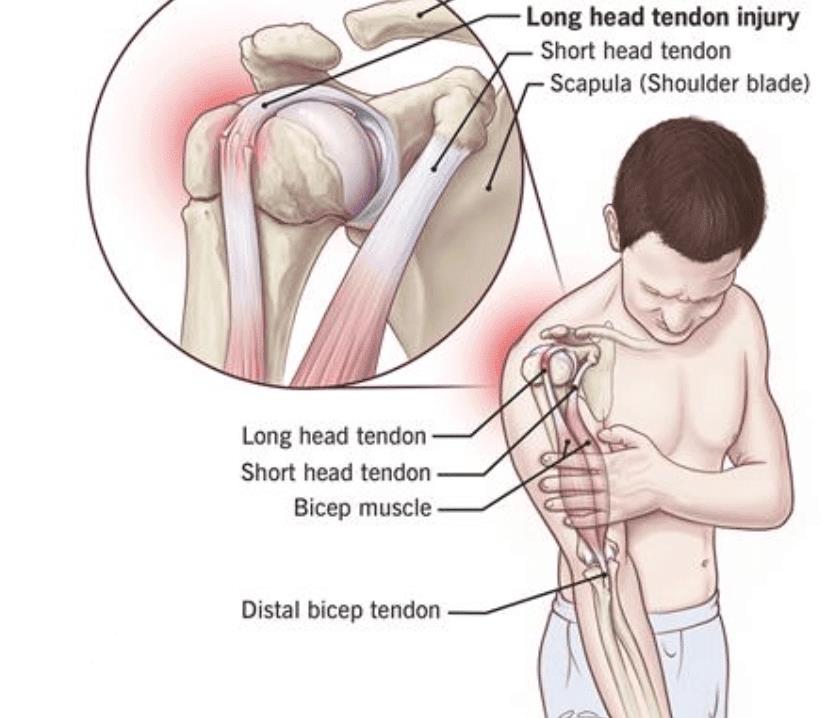
The long head of the biceps tendon is a common source of anterior shoulder pain, particularly in patients involved in repetitive overhead activity, weight training, throwing sports, and manual labor. In many patients, chronic irritation or instability of the tendon can lead to persistent inflammation, pain, weakness, and impaired shoulder performance.
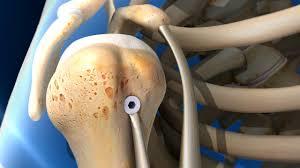
Biceps tenodesis removes the diseased portion of the tendon from the shoulder joint and secures the healthy tendon to the humerus. The goal of surgery is to reduce pain, improve function, preserve cosmetic appearance, and restore shoulder performance while minimizing cramping or instability symptoms.
This rehabilitation program follows a conservative, criterion-based progression designed to protect tendon healing while restoring mobility, strength, scapular control, and upper extremity performance.
Progression should always be individualized based on:
- Surgical technique utilized
- Tissue quality
- Associated procedures performed
- Rotator cuff involvement
- Pain and inflammatory response
Movement quality, strength progression, and occupational or sport demands should be continually assessed. Communication between the patient, physical therapist, athletic trainer, and surgeon is strongly encouraged throughout recovery.
Understanding Biceps Tendon Pathology
What Is the Long Head of the Biceps?
The long head of the biceps tendon travels through the shoulder joint before exiting into the bicipital groove of the humerus. In addition to helping flex the elbow and rotate the forearm, the tendon contributes to shoulder stability and overhead shoulder function.
Because of its position within the shoulder, the tendon is subjected to repetitive stress during throwing sports, weight lifting, overhead activity, repetitive pulling or lifting, and rotational shoulder loading.
Common Symptoms
- Pain in the front of the shoulder
- Clicking or snapping sensations
- Weakness with lifting or pulling
- Pain with overhead activity
- Discomfort during pressing or throwing motions
- Night pain or inflammation
Goals of Biceps Tenodesis
- Remove diseased tendon tissue
- Decrease pain and inflammation
- Restore shoulder function
- Maintain strength and appearance
- Improve tolerance to activity and sport
Healing of the tendon into bone occurs gradually over several months. Early protection is important to avoid excessive stress on the surgical fixation site.
General Rehabilitation Principles
Early Priorities
- Protect tendon healing
- Control pain and inflammation
- Restore gentle shoulder mobility
- Prevent stiffness
- Maintain scapular control
- Avoid overload of the biceps tendon
Long-Term Priorities
- Restore full shoulder mobility
- Rebuild rotator cuff and scapular strength
- Improve upper extremity endurance
- Restore pulling and overhead mechanics
- Safely return to training and sport
Postoperative Expectations
Common Early Symptoms
- Shoulder tightness or soreness
- Bruising near the upper arm
- Mild swelling
- Fatigue with arm positioning
- Temporary weakness
- Sleep discomfort
- Mild discomfort during exercises
Contact Dr. Ford If You Experience
- Fever greater than 101°F
- Significant redness or drainage
- Progressive swelling
- Severe uncontrolled pain
- Shortness of breath
- Progressive numbness or weakness
- Calf pain or swelling
Rehabilitation Timeline Overview
| Phase | Timeline | Primary Goals |
|---|---|---|
| Phase I | Weeks 0-3 | Protection, pain control, passive mobility |
| Phase II | Weeks 4-6 | Restore motion and initiate activation |
| Phase III | Weeks 7-9 | Strength restoration and neuromuscular control |
| Phase IV | Weeks 10-12 | Advanced strengthening and functional loading |
| Phase V | Months 3-6 | Return to sport and performance |
PHASE I — PROTECTION & PASSIVE MOBILITY (Weeks 0-3)
Goals
- Protect tendon fixation
- Control pain and inflammation
- Restore gentle passive mobility
- Maintain scapular activation
- Prevent stiffness
Sling Use
- Sling worn for approximately 2 weeks for protection, however, if your procedure also involved a full rotator cuff repair Dr. Ford may extend the sling time to 6 weeks.
- May remove for exercises and hygiene
- Avoid unsupported arm positioning
Precautions
- No resisted elbow flexion
- No resisted forearm supination
- No lifting heavier than a coffee cup
- No sudden pulling movements
- Avoid active biceps loading
- Limit external rotation to protected range
Recommended Interventions
Mobility: Pendulum exercises, Gentle passive shoulder ROM, Passive elbow flexion/extension, Passive forearm pronation/supination, Wrist and hand mobility
Scapular Activation: Scapular clocks, Scapular retraction drills, Scapular isometrics, Postural awareness training
Pain Management: Cryotherapy, Sleep positioning education, Activity modification strategies
Cardiovascular & Lower Body Activity: Walking program, Lower body training without arm stress (No running, jumping, or swimming during this phase)
Criteria to Progress
- Pain controlled
- Minimal inflammatory response
- Incisions healing appropriately
- Tolerates passive mobility
- Good compliance with precautions
PHASE II — ACTIVE MOTION & EARLY CONTROL (Weeks 4-6)
Goals
- Restore full passive mobility
- Gradually restore active motion
- Improve scapular control
- Initiate gentle muscular activation
- Normalize movement quality
Precautions
- No heavy lifting
- Avoid aggressive stretching
- Avoid excessive anterior shoulder stress
- No resisted biceps strengthening yet
Recommended Interventions
Mobility: Active-assisted ROM progression, Lawn chair progression, Cross-body mobility, Sleeper stretch, Controlled active ROM progression
Early Strengthening: Scapulothoracic stabilization, Rotator cuff isometrics, Serratus activation, Rhythmic stabilization drills, Glenohumeral control exercises
Elbow & Forearm: Active elbow flexion/extension, Active forearm pronation/supination (No resistance during this phase)
Cardiovascular & Core: Stationary bike, Walking progression, Core strengthening, Lower extremity strength training
Movement Quality Focus
- Avoid upper trapezius compensation
- Maintain scapular positioning
- Emphasize controlled shoulder mechanics
- Avoid painful movement patterns
Criteria to Progress
- Near full ROM
- Minimal pain with daily activity
- Good scapular control
- No reactive inflammation
- Tolerates active motion progression
PHASE III — STRENGTH RESTORATION & NEUROMUSCULAR CONTROL (Weeks 7-9)
Goals
- Restore muscular strength and endurance
- Improve dynamic shoulder control
- Initiate light biceps strengthening
- Normalize upper extremity movement patterns
- Improve functional tolerance
Recommended Interventions
Strengthening: Light biceps curls progression, Theraband internal/external rotation, Forward punch progression, Closed-chain stabilization drills, Side-lying ER progression, Scaption progression, Prone T, Y, and row progression
Neuromuscular Control: Rhythmic stabilization, Reactive stabilization drills, Scapular control training, Closed-chain proprioception
Core & Athletic Integration: Aggressive trunk stabilization, Rotational core training, Lower extremity strength progression
Conditioning
Running progression may begin in moderation (limit excessive arm swing initially). Swimming remains restricted during this phase.
Precautions
- Avoid heavy lifting
- Avoid explosive upper extremity movements
- Avoid painful strengthening
- Emphasize low-load endurance development
Criteria to Progress
- Full pain-free ROM
- Improved shoulder endurance
- Good scapular mechanics
- Tolerates strengthening without irritation
- No compensatory movement patterns
PHASE IV — ADVANCED STRENGTH & FUNCTIONAL PERFORMANCE (Weeks 10-12)
Goals
- Restore advanced shoulder strength
- Improve upper extremity endurance
- Progress functional loading
- Prepare for sport and occupational demands
Recommended Interventions
Strength Progression: Resisted supination/pronation, Progressive isotonic strengthening, Dumbbell strengthening progression, Landmine press progression, Cable stabilization drills, Push-up progression
Functional Training: Dynamic stabilization drills, Closed-chain loading, Carry progression, Rotational control training, Functional pressing and pulling patterns
Athletic Preparation: Progressive return to weight training, Sport-specific movement preparation, Controlled overhead progression
Weight Training Considerations
Patients returning to weight training should initially avoid heavy military press, wide-grip bench press, heavy overhead pressing, aggressive front raises, and explosive overhead lifting. Load progression should be gradual and symptom-guided.
Criteria to Progress
- Symmetric shoulder mobility
- Good strength and endurance
- Pain-free strengthening
- Good movement quality
- No reactive inflammation
PHASE V — RETURN TO SPORT & PERFORMANCE (Months 3-6)
Goals
- Restore full upper extremity performance
- Improve power and endurance
- Return to unrestricted activity
- Reduce reinjury risk
Advanced Training
- Plyometric progression
- Overhead endurance training
- Pull-up progression
- Push-up progression
- High-velocity stabilization drills
- Sport-specific strengthening
- Throwing progression if indicated
Physical Therapy Communication Notes
Please contact the surgical team regarding persistent stiffness, significant ROM deficits, persistent anterior shoulder pain, excessive inflammation, delayed strength progression, concerns regarding tendon irritation, or failure to progress appropriately.
Final Notes for Patients
Recovery after biceps tenodesis is a gradual process that requires consistency, patience, and progressive loading. Although many patients experience early pain relief, full restoration of shoulder strength, endurance, and performance takes several months. Long-term success depends on consistent physical therapy, proper exercise progression, rotator cuff and scapular strengthening, gradual return to lifting and sport, and attention to recovery and movement quality.