This rehabilitation protocol is designed for patients recovering from anatomic total shoulder arthroplasty (TSA).
Anatomic shoulder replacement is commonly performed for:
- Advanced glenohumeral arthritis
- Degenerative joint disease
- Osteoarthritis
- Inflammatory arthritis
- Post-traumatic arthritis
- Selected proximal humerus fractures
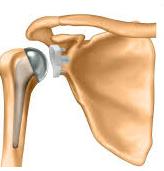
The goal of shoulder replacement surgery is to restore smooth joint mechanics by replacing the damaged ball-and-socket surfaces with prosthetic components. In an anatomic shoulder replacement, the normal anatomy of the shoulder is preserved with a metal humeral head and polyethylene glenoid component.
Unlike reverse shoulder arthroplasty, successful function following anatomic shoulder replacement depends heavily on a healthy and functional rotator cuff.
The goals of surgery are to:
- Reduce pain
- Restore mobility
- Improve shoulder function
- Improve quality of life
- Restore independence with daily activity
- Safely return patients to recreational and functional activity
Successful recovery requires a gradual, criterion-based rehabilitation progression focused on protecting soft tissue healing, restoring mobility, rebuilding rotator cuff and scapular strength, and optimizing long-term shoulder mechanics.
This protocol follows a conservative progression designed to protect healing tissue while restoring functional shoulder performance.
Progression should always be individualized based on:
- Surgical complexity
- Rotator cuff quality
- Bone quality
- Associated procedures performed
- Pain and inflammatory response
- Movement quality and strength progression
- Functional and recreational demands
Communication between the patient, physical therapist, caregivers, and surgical team is strongly encouraged throughout recovery.
Understanding Total Shoulder Arthroplasty
What Is an Anatomic Shoulder Replacement?
An anatomic shoulder replacement restores the normal ball-and-socket anatomy of the shoulder joint.
The procedure involves:
- Replacing the arthritic humeral head with a metal implant
- Replacing the glenoid socket with a polyethylene component
- Restoring smooth joint articulation
- Improving shoulder mechanics and motion
Because the rotator cuff remains important for stability and movement after surgery, protecting soft tissue healing and restoring muscular control are critical during rehabilitation.
Why Are Early Precautions Important?
During surgery, important soft tissue structures including the subscapularis tendon and anterior capsule are often addressed. These tissues require time to heal.
Excessive early stretching, forceful rotation, or aggressive strengthening may compromise healing and delay recovery.
General Rehabilitation Principles
Early Priorities
- Protect surgical repair and soft tissue healing
- Control pain and inflammation
- Restore protected passive mobility
- Prevent stiffness
- Maintain elbow, wrist, and hand motion
- Initiate scapular control
Long-Term Priorities
- Restore shoulder mobility
- Rebuild rotator cuff and scapular strength
- Improve endurance and shoulder mechanics
- Restore functional reaching and lifting
- Safely return to recreational activity
Postoperative Expectations
Common Early Symptoms
The following symptoms are common during early recovery:
- Shoulder soreness and tightness
- Swelling and bruising
- Sleep discomfort
- Temporary weakness
- Fatigue with arm positioning
- Mild discomfort during exercises
Contact Dr. Ford If You Experience:
- Fever greater than 101°F
- Increasing redness or drainage
- Progressive swelling
- Severe uncontrolled pain
- Sudden loss of shoulder function
- Numbness or weakness
- Shortness of breath or calf pain
Rehabilitation Timeline Overview
| Phase | Timeline | Primary Goals |
|---|---|---|
| Phase I | Weeks 0-6 | Protection, passive mobility, pain control |
| Phase II | Weeks 6-10 | Active motion restoration |
| Phase III | Weeks 10-16 | Strength restoration and neuromuscular control |
| Phase IV | Months 4-6 | Advanced strengthening and functional progression |
| Phase V | Months 5-6+ | Return to recreational activity |
Important Early Precautions
During the early recovery period:
- Avoid aggressive external rotation
- Avoid forceful stretching
- Avoid sudden pulling or jerking movements
- Avoid lifting with the operative arm
- Avoid supporting body weight through the arm
- Keep the elbow in front of the body during early recovery
Protection of the subscapularis repair and anterior shoulder structures is critical.
PHASE I — PROTECTION & PASSIVE MOBILITY (Weeks 0-6)
Goals
- Protect the shoulder replacement
- Protect soft tissue healing
- Control pain and inflammation
- Restore protected passive mobility
- Prevent stiffness
- Maintain elbow, wrist, and hand mobility
Sling Use
- Sling worn consistently during this phase
- May remove sling at home while resting if shoulder is protected
- Sleep in sling for approximately 4-6 weeks or as directed
Precautions
- No active shoulder motion initially
- No lifting with operative arm
- Avoid forceful external rotation
- Avoid sudden shoulder movements
- Avoid shoulder hyperextension
Recommended Interventions
Mobility: Pendulum exercises, Supine forward elevation within protected limits, Supine external rotation within surgeon-directed limits, Passive internal rotation to chest, Elbow, wrist, and hand ROM
Scapular Activation: Scapular retraction drills, Postural awareness training, Gentle periscapular activation
Pain & Swelling Management: Cryotherapy, Sleep positioning education, Activity modification strategies
Movement Quality Focus
- Maintain relaxed shoulder mechanics
- Avoid compensatory shoulder hiking
- Emphasize controlled movement patterns
Criteria to Progress
- Pain controlled
- Incisions healing appropriately
- Tolerates passive ROM program
- Minimal inflammatory response
- Good compliance with precautions
PHASE II — ACTIVE MOTION RESTORATION (Weeks 6-10)
Goals
- Restore full passive mobility
- Gradually restore active motion
- Improve dynamic shoulder stability
- Normalize movement mechanics
- Improve functional arm use
Precautions
- Avoid forceful stretching
- Avoid heavy lifting
- Avoid sudden loading
- Avoid painful movement patterns
Recommended Interventions
Mobility: Active-assisted ROM progression, Standing and seated elevation progression, Wall climb progression, Cross-body mobility, External rotation progression within tolerance
Early Strengthening: Side-lying external rotation, Scapular stabilization drills, Prone horizontal raises, Rotator cuff activation, Rhythmic stabilization drills
Functional Training: Feeding and grooming activities, Controlled reaching patterns, Light activities of daily living, Postural retraining
Cardiovascular & Lower Body Conditioning: Walking progression, Stationary bike, Lower extremity strengthening, Core stabilization training
Movement Quality Focus
- Avoid upper trapezius compensation
- Restore smooth scapulohumeral rhythm
- Maintain proper shoulder mechanics
- Emphasize rotator cuff control
Criteria to Progress
- Improved active shoulder function
- Good movement quality
- Minimal reactive inflammation
- Tolerates active motion progression
- Appropriate rotator cuff activation
PHASE III — STRENGTH RESTORATION & NEUROMUSCULAR CONTROL (Weeks 10-16)
Goals
- Restore shoulder strength
- Improve muscular endurance
- Enhance dynamic shoulder stability
- Improve functional reaching and lifting tolerance
- Restore movement efficiency
Recommended Interventions
Strengthening: Theraband internal/external rotation, Forward punch progression, Seated row progression, Shoulder shrug progression, Biceps strengthening, Rotator cuff endurance training
Neuromuscular Training: Rhythmic stabilization drills, Scapular control progression, Closed-chain stabilization drills, Reactive shoulder control
Functional Strength: Controlled carrying drills, Functional lifting progression, Multi-planar shoulder control, Endurance circuits
Precautions
- Avoid heavy lifting
- Avoid sudden jerking motions
- Avoid uncontrolled overhead loading
- Progress resistance gradually
Criteria to Progress
- Near full ROM
- Good shoulder mechanics
- Improved strength and endurance
- Pain-free daily activity
- Minimal compensatory movement patterns
PHASE IV — ADVANCED STRENGTH & FUNCTIONAL PERFORMANCE (Months 4-6)
Goals
- Improve shoulder endurance and control
- Restore recreational activity tolerance
- Improve functional lifting and reaching
- Continue strengthening progression
Recommended Interventions
Strength Progression: Progressive dumbbell strengthening, Full-can progression, Lateral raise progression, Prone row and extension progression, Advanced rotator cuff strengthening, Functional carry progression
Functional Training: Functional reaching drills, Light overhead progression, Recreational activity preparation, Movement efficiency training
Athletic & Recreational Preparation: Swimming progression, Golf progression, Tennis progression, Interval return-to-activity progression as appropriate
Weight Training Considerations
Patients returning to strength training should avoid:
- Heavy behind-the-neck pressing
- Aggressive overhead lifting
- Sudden high-force loading
- Heavy wide-grip bench press
Exercise progression should prioritize movement quality, endurance, and joint protection.
Criteria to Progress
- Symmetric functional motion
- Good shoulder endurance
- Pain-free strengthening
- Appropriate recreational readiness
- Good movement quality
PHASE V — RETURN TO ACTIVITY & LONG-TERM MAINTENANCE (Months 5-6+)
Goals
- Restore long-term shoulder function
- Improve endurance and strength maintenance
- Safely return to recreational activities
- Maintain long-term implant protection
Advanced Training
- Continued strengthening progression
- Recreational activity participation
- Functional endurance training
- Long-term home exercise maintenance
Long-Term Considerations
Most patients achieve:
- Significant pain relief
- Improved mobility
- Improved quality of life
- Better overhead reach
- Improved daily function
Long-term shoulder health depends on consistent exercise, rotator cuff and scapular maintenance, avoiding excessive overload, and maintaining mobility and posture. Functional improvements may continue for up to 12 months following surgery.
Physical Therapy Communication Notes
Please contact the surgical team regarding persistent stiffness, significant pain escalation, concerns regarding rotator cuff function, delayed recovery progression, difficulty restoring functional mobility, concerns regarding implant integrity, or excessive inflammatory response.
Final Notes for Patients
Recovery after total shoulder replacement is a gradual process focused on restoring pain-free movement, shoulder control, and functional independence. Although many patients experience meaningful pain relief early after surgery, rebuilding strength, endurance, and shoulder confidence takes several months.
Long-term success depends on consistent physical therapy, rotator cuff and scapular strengthening, safe movement mechanics, gradual return to activity, and maintaining a long-term exercise program. The rehabilitation process should prioritize movement quality, endurance, and long-term joint protection rather than aggressive strengthening.