This rehabilitation protocol is designed for patients recovering from reverse shoulder arthroplasty (rTSA).
Reverse shoulder replacement is commonly performed for:
- Rotator cuff arthropathy
- Massive irreparable rotator cuff tears
- Advanced shoulder arthritis
- Complex proximal humerus fractures
- Failed prior shoulder surgery
- Revision shoulder arthroplasty
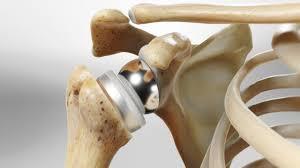
Unlike a traditional shoulder replacement, a reverse shoulder replacement changes the mechanics of the shoulder joint by reversing the ball-and-socket orientation. This allows the deltoid muscle and surrounding shoulder musculature to compensate for deficient rotator cuff function and improve arm elevation, function, and pain control.
The primary goals of surgery are to:
- Reduce pain
- Improve shoulder function
- Restore independence with activities of daily living
- Improve arm elevation and overhead reach
- Improve quality of life and shoulder endurance
Successful recovery requires a gradual, criterion-based rehabilitation progression focused on protecting the joint replacement, restoring mobility, rebuilding deltoid and periscapular strength, and improving functional movement quality.
This protocol follows a conservative progression designed to minimize instability risk and safely restore functional shoulder performance.
Progression should always be individualized based on surgical complexity, bone quality, revision versus primary procedure, soft tissue integrity, pain and inflammatory response, functional demands, and movement quality and strength progression.
Understanding Reverse Shoulder Arthroplasty
How Is a Reverse Shoulder Different?
In a reverse shoulder replacement:
- The normal socket is replaced with a ball component
- The humerus receives a socket component
- The center of shoulder rotation is shifted
- The deltoid muscle becomes the primary elevator of the arm
This change improves shoulder mechanics in patients with rotator cuff dysfunction and allows many patients to regain arm elevation that was previously impossible.
Why Are Precautions Important?
Following reverse shoulder replacement, shoulder stability depends heavily on the deltoid and surrounding musculature. The shoulder is at greatest risk for instability with combined shoulder extension, adduction, and internal rotation. Movements such as reaching behind the body, tucking in a shirt, pushing off a chair, or reaching into a back pocket can place excessive stress on the joint during early healing.
General Rehabilitation Principles
Early Priorities
- Protect the joint replacement
- Control pain and inflammation
- Prevent stiffness within safe ranges
- Restore elbow, wrist, and hand mobility
- Initiate scapular and deltoid activation
- Maintain safe movement patterns
Long-Term Priorities
- Improve shoulder elevation and function
- Restore independence with daily activities
- Rebuild deltoid and periscapular endurance
- Improve upper extremity strength and control
- Restore functional reach and lifting capacity
Postoperative Expectations
Common Early Symptoms
- Shoulder soreness and tightness
- Swelling and bruising
- Fatigue with arm positioning
- Temporary weakness
- Sleep discomfort
- Difficulty with reaching and dressing
Contact Dr. Ford If You Experience:
- Fever greater than 101°F
- Increasing redness or drainage
- Progressive swelling
- Severe uncontrolled pain
- Sudden loss of shoulder function
- Numbness or weakness
- Shortness of breath or calf pain
Rehabilitation Timeline Overview
| Phase | Timeline | Primary Goals |
|---|---|---|
| Phase I | Weeks 0-6 | Protection, passive mobility, pain control |
| Phase II | Weeks 6-12 | Active motion and early strengthening |
| Phase III | Months 3-4 | Functional strengthening and endurance |
| Phase IV | Months 4-6+ | Return to functional activity (golf, tennis, pickleball etc) |
Important Reverse Shoulder Precautions
- No shoulder extension past neutral
- Avoid combined internal rotation, adduction, and extension
- Avoid reaching behind the body
- Avoid pushing up from a chair with the operative arm
- Avoid sudden pulling or jerking motions
- Avoid supporting body weight through the operative arm
Patients should always keep the elbow and hand in front of the body during early recovery.
PHASE I — PROTECTION & PASSIVE MOBILITY (Weeks 0-6)
Goals
- Protect the shoulder replacement
- Control pain and inflammation
- Restore protected passive mobility
- Prevent stiffness within safe ranges
- Maintain elbow, wrist, and hand motion
- Initiate deltoid and scapular activation
Sling Use
- Sling worn consistently during this phase
- Sleep in sling for approximately 2 weeks or as directed
- Sling may be removed for exercises and hygiene
Precautions
- No active shoulder motion initially
- No lifting with operative arm
- No supporting body weight through the arm
- Avoid shoulder hyperextension
- Strictly follow instability precautions
Recommended Interventions
Mobility: Pendulum exercises, Supine forward elevation within protected range, Supine external rotation within surgeon-directed limits, Elbow, wrist, and hand ROM
Muscle Activation: Scapular retraction drills, Deltoid isometrics in protected positions, Gentle periscapular activation
Pain & Swelling Management: Cryotherapy, Positioning education, Sleep modification strategies
Movement Quality Focus
- Maintain elbow in front of the body
- Avoid compensatory trunk extension
- Emphasize controlled movement patterns
Criteria to Progress
- Pain controlled
- Incisions healing appropriately
- Tolerates passive ROM program
- Good compliance with precautions
- Appropriate deltoid activation
PHASE II — ACTIVE MOTION & EARLY STRENGTHENING (Weeks 6-12)
Goals
- Gradually restore active shoulder motion
- Improve dynamic shoulder stability
- Rebuild deltoid and periscapular control
- Improve functional arm use
- Maintain safe shoulder mechanics
Precautions
- Continue instability precautions
- Avoid sudden loading
- Avoid forceful reaching behind the body
- No heavy lifting
Recommended Interventions
Mobility: Progressive active-assisted ROM, Forward elevation progression, External and internal rotation progression within tolerance, Gentle mobility restoration
Early Strengthening: Deltoid strengthening progression, Scapulothoracic stabilization, Rhythmic stabilization drills, Alternating isometrics, Light isotonic strengthening
Functional Training: Feeding and grooming activities, Controlled reaching patterns, Light activities of daily living, Postural retraining
Cardiovascular & Lower Body Conditioning: Walking progression, Stationary bike, Lower extremity strengthening, Core and trunk stability training
Movement Quality Focus
- Avoid upper trapezius dominance
- Emphasize scapular control
- Encourage smooth shoulder mechanics
- Avoid compensatory trunk lean
Criteria to Progress
- Improved active shoulder function
- Tolerates strengthening progression
- Good scapular mechanics
- Improved deltoid activation
- Minimal reactive inflammation
PHASE III — FUNCTIONAL STRENGTH & ENDURANCE (Months 3-4)
Goals
- Improve functional shoulder strength
- Increase muscular endurance
- Restore independence with daily activities
- Improve reaching and carrying tolerance
- Enhance movement efficiency
Recommended Interventions
Strengthening: Progressive resisted flexion and elevation, Theraband strengthening progression, Functional carrying drills, Deltoid endurance training, Scapular endurance exercises
Neuromuscular Training: Closed-chain stabilization drills, Dynamic scapular control, Functional reach progression, Reactive balance and posture integration
Functional Activity Training: Household task simulation, Functional reaching, Light lifting progression, Modified recreational activity training
Precautions
- No sudden jerking movements
- Avoid heavy overhead lifting
- Avoid forceful extension behind the body
- Progress loading gradually
Criteria to Progress
- Pain-free functional motion
- Improved endurance
- Good movement quality
- Independent ADL performance
- Improved shoulder mechanics
PHASE IV — ADVANCED FUNCTION & LONG-TERM MAINTENANCE (Months 4-6+)
Goals
- Maximize functional shoulder performance
- Improve endurance for daily activities
- Return to recreational activity within safe limits
- Maintain long-term implant protection
Advanced Training
- Continued strengthening progression
- Functional endurance training
- Carry and lifting progression
- Light recreational activity progression
- Long-term shoulder maintenance program
Long-Term Considerations
Patients with reverse shoulder arthroplasty should generally avoid heavy repetitive overhead lifting, sudden forceful pulling, high-impact loading, aggressive weight training, and heavy pushing activities. Exercise progression should prioritize endurance, movement quality, and joint protection over maximal loading.
Physical Therapy Communication Notes
Please contact the surgical team regarding persistent stiffness, significant pain escalation, concerns regarding instability, sudden loss of shoulder function, delayed recovery progression, difficulty restoring functional mobility, or concerns regarding implant integrity.
Final Notes for Patients
Recovery after reverse shoulder replacement is a gradual process focused on restoring safe, functional shoulder movement. Although many patients notice meaningful pain relief early after surgery, rebuilding strength, endurance, and movement confidence takes several months.